THE MUSICAL COA-COA BASKET 

"One good thing about music, when it hits; you feel no pain."

Bob Marley (1945 - 1981)

Music has always played an important role in all our lives, especially Reggae, the music genre first developed in Jamaica, strongly influenced by traditional African, American jazz and old-time rhythm and blues. Reggae owes its direct origins to the progressive development of Ska and Rocksteady in 1960s Jamaica. THE MUSICAL COA-COA BASKET salutes the legendary artists and recording studios from out of Jamaica who have placed reggae on the musical global map.
_____________________________________________________________
SPOTLIGHT
spotlight
PRINCE FAR I
(The Voice of  Thunder)
Prince Fari
Prince Fari - 1944 - 1983
The 1970s is the decade recalled as the golden age of roots reggae, primarily due to the fact that during these years many legendary artists came to prominence. Amongst those singers, DJs, vocal groups, musicians and producers perhaps the best-loved by the UK audience was the man known as Prince Far I - not so much a DJ in the classic style, but more a chanter of words. Watch and listen up here...

___________________________________________

ALTON ELLIS

alton Ellis

1938 - 2008

_____________________________________________________________
Alton Nehemiah Ellis, better known as simply Alton Ellis to all reggae connoisseurs, was born on September 1, 1938, in the Trenchtown area of Kingston, Jamaica;  an area of Jamaica that was home to other leading musicians, including Bob Marley, Bunny Wailer and Peter Tosh. He was a prominent singer, songwriter, producer and concert promoter, referred to by many as the "Godfather of Rocksteady," an R&B American-styled Jamaican music genre. 
Ellis excelled at both sports and music at the Boys' Town school, and made a habit of breaking into the school after hours to teach himself to play the piano. He and his younger sister, Hortense, started out like many other Jamaican performers, by competing on well-known talent shows like Vere John's Opportunity Hour. 
The 1959 R&B song "Muriel," which Ellis recorded as part of the duo Alton & Eddie and with producer Clement "Coxsone" Dodd, topped the Jamaican charts. Ellis was working as a construction worker at the time. Due to the success of "Muriel," he became a constant presence on Jamaica's music charts throughout the 1960s and early 1970s. 
Many of Ellis's follow-up tracks became instant classics, including the love songs "I'm Just A Guy," "Girl I've Got A Date" and "Get Ready Rock Steady," which started a dance craze in 1966 and became Ellis's signature tune. "Rocksteady" produced songs of love and longing, and blazed a trail in a Jamaica dominated by hard-edged, horn-driven ska music and its spiritual, rebellious cousin, Reggae. Ellis also used his distinctive tenor to infuse new life into cover versions of hits like Johnny Taylor's "Ain't That Loving You" and the Delfonics' "La La (Means I Love You)." 
Ellis spent several months living in the United States and three years in Canada, finally moving to the United Kingdom in 1973, where he continued to record. In 1970, he was inducted into the Hall of Fame at the International Reggae and World Music Awards. In 1994, he received the Order of Distinction from the Jamaican government, in recognition of his contribution to the island's popular culture. 
Ellis died of multiple myeloma, a form of bone cancer, on October 11, 2008, in London. He was 70 years old at the time, and was given a state funeral in honor of the legacy he left to Jamaican music. He was survived by several children and many grandchildren.
Source: © 2015 Biography.com
___________________________________________

 DISCOGRAPHY

(Click on each track to listen)


Muriel - Alton & Eddie  
I'm Just A Guy - Alton Ellis 
Girl I've Got A Date - Alton Ellis   
Get Ready Rock Steady - Alton Ellis   
Ain't That Loving You - Alton Ellis  
Breaking Up - Alton Ellis 
La La Means I Love You - Alton Ellis  
It's True - Alton Ellis  
Black Man's Pride - Alton Ellis 
Sitting In The Park - Alton Ellis 
Willow Tree - Alton Ellis
I'm Still in Love with You (Girl) - Alton Ellis (featuring Hortense Ellis)
It's A Shame - Alton Ellis
Reason in the Sky - Alton Ellis 
Too Late - Alton Ellis (featuring the late Augustus Pablo)
_____________________________

'TIL THE NEXT MUSICAL COA-COA BASKET

"EVERTING - BLESS"

___________________________________________ 
FEATURED ARTICLE

Norman Samuda Smith's 

BRITANNIA'S CHILDREN


Britannia's Children Flyer

by Beresford Callum (c) 2015

Bez

'If you haven't purchased and read BRITANNIA'S CHILDREN by Norman Samuda Smith, here are my reasons why you should...'

An anthology of short stories which together not only represents a time capsule of black British youth experiences between the 1960s and possibly the late 1970s, Britannia’s Children by Norman Samuda Smith (2013), is also an organic record of the author’s Journeys. I read this book several times; first for leisure. Secondly, I read to establish a chronology other than that given by the year each story was written, for I felt so familiar with the setting and characters of each story I was forced to ask the questions Who and When? Lastly, I read to harvest the information between the lines. The hidden having dissected and critically analyzed Smith’s stories I found Britannia’s Children to be original, honest, inspirational and humbling. 
As a book for leisure the mention of the familiar (for example Birmingham City Center, Grange Road Park and the Small Heath Community Center) evoked the feeling of nostalgia.  At the most basic level it did for me and will do for the Birmingham populace; particularly if one traverses the Small Heath area, what the books of famous crime novelist Patricia Cornwell did for residents of the city of Richmond, Virginia (United States). Cornwell, having an intricate knowledge of Richmond used the City’s various locales as a backdrop to her stories. Just knowing that one shared the same knowledge as the writer not only spurred local interest, it boosted sales and often triggered heated discussion as to her accuracy. Every story triggered ten stories for me thus setting me on an emotional roller coaster. 
Reading between the lines I found the first four stories 1981 through 1985 to be very revealing. Careful scrutiny of these stories; all of which have been presented in chronological order, gives a rough insight to Smith searching to find his dialect, his medium of expression and his true voice. As I read the stories I made note of the writer’s use of Caribbean colloquialism, British slang and of course standard English. As Smith grew more confident and comfortable Caribbean colloquialisms were less forced and he interjected some British working class slang. By Rasta Love it was a Standard English texture in varying degrees by colloquialisms and slang determined by situation. The book is truly an excellent example of hybridization. 
Having written the above I must say I was not only pleasantly surprised by its contents, it was difficult keeping my comments objective. A contemporary of Smith’s from infant through to Secondary school up until 1973, Britannia’s Children appealed to me at multiple levels. Every story triggering ten stories thus causing my emotions to undulate as if riding on a roller coaster. There were very few stories in which I did not seem to be directly or indirectly involved but I can testify to the authenticity. 
In the story Who Can’t Hear Must Feel!” (Verse 1), the names Wendell and Leroy used in this tale are undoubtedly pseudonyms; I actually know who these two particular boys are. However, even if I did not, we all have knowledge of the family structure that they represent. I was one of those kids harmlessly begrudged for being able to play in the Park every day. The Grange Road Park was my backyard. Less known were the circumstances which made our freedom possible. Along with four other families, my family lived in a row house on Charles Road. With multiple sets of children in a rooming house and a backyard that was essentially a dump there was little room for play. Fortunately, the windows of the second floor kitchen used by my mother and the attic in which we lived both gave my parents panoramic views of the Grange Road Park. Being able to watch my every move I was given the false sense of freedom. This was true for several of my peers that played in the park daily, we were what are referred to in Caribbean culture as ‘one room pick ninny’. I find it humorous that while I begrudged Wendell and Leroy for their small private backyard, they begrudged me for my compulsory freedom. My parents would say, “Buoy!! The grass is not greener over the fence, just depends on how the sun shine pon it”. I guess they were right. 
While I am familiar with the Streets named, I know nothing of Small Heath sound systems and dance hall life as portrayed in Rasta LoveI was plucked out of Birmingham before completing secondary school. My party experience in Birmingham is restricted to the summer of 1988. Similarly, my experience with the Small Health Community Center is limited to two evenings of indoor football. The stories in which they are mentioned however are very powerful triggers. I could see the houses on Muntz Street from our attic. Once being a truant from school I watched two houses on fire being put out by the firemen. Then related the events to my father, was my undoing. He realized I could not possibly have been at school and witnessed the fire. I will never forget that thrashing!! The characters Robo, Pedro and Beres who play active roles in the story are very real to me. These were the names of my peers with whom I (Smith included) ate lunch, walked to and from school, every day for a number of years. These names are those of the Alston Boys Secondary School crew, we huddled together as birds of a feather, played football, cricket, basketball and even sang on the school choir. 
I was a member of that 1972 football team written about in the story titled The Football Match. I could never for the life of me recall the ending score or what precipitated the match. What I always remembered was fighting an Irish guy Mickey Jaggers. Also normally if we had to be on the Ritz field after school, the crew would exit the field on the Yardley Green end and walk it home via Green Lane as we all lived, on that side of Small Heath. However, on this particular evening for more than just having had a hard game of football, I was hurting all over. I forgot about comradery, somehow exited on the Little Bromwich Road side , walked to the number 54 bus stop  not too far from the Ritz, used my last two pence to catch the bus and ‘draw mi half dead ass’ home. 
Lastly, depending on one’s experiences stories can be a powerful stimuli, Smith’s stories for me were like a shot of adrenaline given to the dying. Having completed Britannia’s Children I had a eureka moment; as a child of Small Heath this did not only plot the author’s Journeys, they were milestones of my own. 
BRITANNIA'S CHILDREN by Norman Samuda-Smith is a must for you and your book collection. 
ISBN: 9781782991656 
Total Pages: 126 
Published: 5 February 2013
         Price: £6.99

Get it @ www.feedaread.com/books/Britannias-Children-9781782991656.aspx
Watch the Britannia's Children book trailer here... 
_____________________________________________________________
THE CULTURE CORNER

"A people without the knowledge of their past history, origin and culture, is like a tree without roots."
 Marcus Mosiah Garvey (1887-1940)
_____________________________________________________________
Every year in the month of October we celebrate BLACK HISTORY MONTH. Black history is with us every second, minute, hour, week, month and year. THE CULTURE CORNER will attempt to enlighten you with what they never told you in your history class. Our story will be told right here - So enjoy the journey of clarification.
_____________________________________________________________
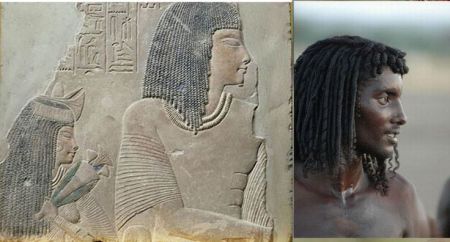
The People of Ta-Seti - "People of the Land of the Bow"
People of upper Egypt

These are the faces of people that are remnants of the great civilization of Pharaohs. Although you almost never see them in the modern Egyptian media, the original people are still there largely un-mixed and with a separate culture. They have largely been squeezed out of the popular culture, but they are still proud and surviving; read more here...  
_____________________________________________________________
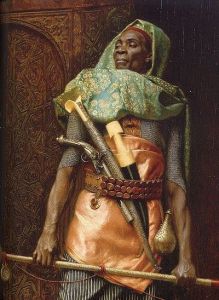
THE MOORS
The Moors

THE MOORS, who settled in and ruled Northern Africa and invaded and conquered many parts of what we would now consider "Southern Europe (Spain, Portugal, France & Southern Italy-ala Sicily)" for nearly 800 years, from as early as the 7th to the 15th century. Their profound, cultural legacy, influence and what they left behind is evident on modern day Spanish architecture, art, music and traditions. The Moors played a significant role during the shaping of prehistory in their early settlememt; read more about them here... - read The Black Moors of Europe here...
_____________________________________________________________
 MOZART
Mozart

This is what Mozart more accurately looked like. The image was found in a radio station in Belgium. FACT - the Moors (Black people) brought Classical Music to Europe: read some more facts about the Moors here...
_____________________________________________________________
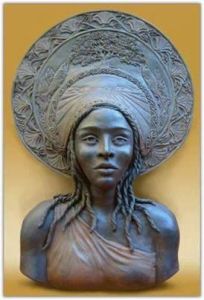
Black Queen Califia

Black Queen Califia

The state of California was named after the mythical Black Queen Califia. According to the story,California was an island where on black women lived. The women were the most powerful women in the world. When Cortez arrived in California, searching for this mythical queen, her influence on him was so severe, he paid tribute to this powerful Black Woman Queen Califia by naming the state after her. California lierally means, "the land where black women live." - Read more about her here...
_____________________________________________________________
 Black's Can Be Re-Enslaved

"A people who don't know their history is doomed to repeat it."
Anita Belle wrote a blog post about the legal way that black people can be re-enslaved; read this enlightening article here... 
_____________________________________________________________
 The Truth About Jamaica and Jamaicans


"How we were made slaves and why we are still not free..."
An excerpt of the explosive lecture presentation by Master Amaru Ka'Re who uncovers the lies about our history and reveals the TRUTH about the so-called Arawaks are fake. Columbus was a mass-murdering theif. The "Slave Trade" was actually a Race War. Jamaican Citizens are legally British property. Christianity is a psychological weapon. Queen Elizabeth II owns the Government of Jamaica, and Jamaicans are neither "independent" nor free.
Watch it on YouTube here...  
_____________________________________________________________
TRIBUTE TO OUR S/HEROES
_____________________________________________________________
 Esther Jones (The Real Betty Boop)

Betty Boop
THE REAL BETTY BOOP: Ms ESTHER JONES; better known by her stage name, "Baby Esther", was an African-American singer and entertainer of the late 1920s. She performed regularly at The Cotton Club in Harlem. Ms Jones performed her 'baby' Singing Style for a recording of "I Wanna Be Loved By You", her recording went on to become the inspiration for Max Fleischer's cartoon character's voice and singing style of BETTY BOOP, a black woman; read more about her here... - Watch the video of her here...  


Maggie Lena Walker 
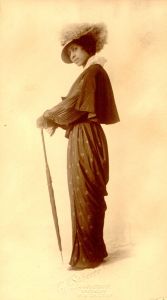
Maggie Walker
Maggie Lena Walker, born July 15, 1864 in Richmond, Virginia; the first woman to found and become president of an American bank. She was the daughter of a former slave and also founded a newspaper and department store. She was also grand secretary of the Independent Order of St. Luke, an organisation dedicated to the social and financial advancement of African Americans; read her biography here... 


Charlotte E. Ray
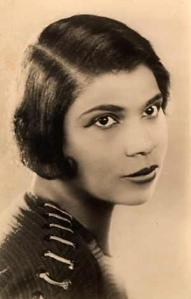
Charlotte E Ray
Charlotte E. Ray was born in New York City, January 13, 1850. She graduated from the Howard University School of Law in 1872 and was admitted to the District of Columbia bar that same year, becoming the first female African American lawyer in the United States. Active in the suffrage movement, Ray was a member of the National Association of Colored Women. She died in New York in 1911; read more about her here...
Joyce Bryant
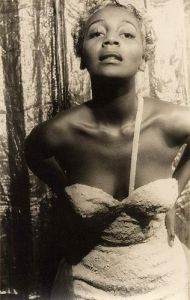
Joyce
Joyce Bryant aka "The Black Marilyn Monroe" aka "The Bronze Blonde Bombshell", known for her perfect hour-glass figure and incredibly sultry act. Jazz singer Joyce Bryant was born in Oakland, but raised in San Francisco, the oldest of eight children, Joyce eloped at aged 14. Although the marriage ended on the wedding night, it outraged her devout Seventh Day Adventist mother and Joyce ended up moving to Los Angeles to live with cousins. There she started singing in clubs, quickly building an enthusiastic following; read more about her here... - Listen to her on YouTube here...

Wallace Rayfield
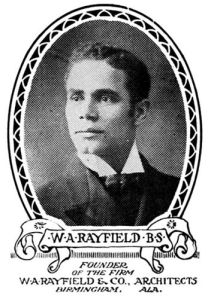
Rayfield

Born in 1872, Wallace Rayfield, the son of a Pullman porter in Macon, Georgia was a legendary craftsman was was second in the nation to be licensed and the first black architect in Alabama. Rayfield's work as an architect consisted of designing the most significant buildings in civil rights history including 16th Street Baptist Church (here...), Ebenezer Baptist Church and the Trinity Building in South Africa; read more about him here...


Thomas Jennings
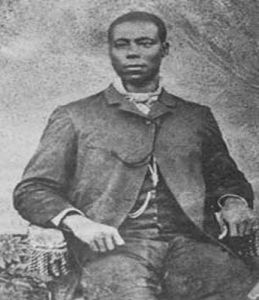
thomas jennings
Thomas Jennings was the first African American to receive a patent, March 3, 1821. His patent was for a fry-cleaning process called "dry scouring". The first money Thomas Jennings earned from his patent was spent on the legal fees necessary to liberate his family out of slavery and support the abolitionst cause; read more about him here...


Julian Abele
julian abele
Julian Abele was a prominent black architect who built more than 400 buildings. Some of them were the Harvard University Widener Memorial Library, Monmouth University's Shadow Lawn Mansion, the Central Branch of the Free Library of Philadelphia and the Philadelphia Museum of Art. Most importantly, Abele was known for building the Duke University Chapel; more information about him here... 


Verone Mankou

verone mankou
Verone Mankou is the genius creator behind the Way-C tablet computer. The tablet is called the Way-C - "the light of the stars" in a dialect of northern Congo. Meet the Way-C, the first African tablet to rival the iPad, created by a young inventor with dreams of bringing internet access to the masses; more information here...


_____________________________________________________________
Here ends your history lesson for this issue 
Follow PANTHER NEWSLETTER on Facebook here or Twitter here for regular updates on news and current affairs
_______________________________________________________________________
Log on for more CULTURE CORNER in the next issue and remember...


"It's easy to be independent when you've got money. But to be independent when you haven't got a thing, that's the lord's test..." 
Mahalia Jackson
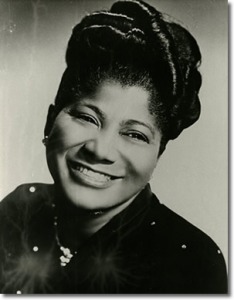
mahalia300
October 26, 1911 - January 27, 1972
_______________________________________________________________________
 Til the next issue - Everyting - Bless
_______________________________________________________________________

PANTHER NEWSLETTER ANNUAL REPORT 2014

 Subscribe in a reader         


It has been a quiet year in the PANTHER NEWSLETTER house for various reasons, personal and otherwise. Despite that, the stats have been prepared for its 2014 annual report.


Here's an excerpt:
A New York City subway train holds 1,200 people. This blog was viewed about 5,700 times in 2014. If it were a NYC subway train, it would take about 5 trips to carry that many people...


BROOKLYNS BEST BLACKPOET SAYS...

 Subscribe in a reader
 Image
"Folks grab a copy of Britannia's Children for yourself and kids. Great job Norman Samuda Smith. Continue the great work..."
"Get your copy of Britannia's Children by Norman Samuda Smith @ http://www.feedaread.com/books/Britannias-Children-9781782991656.aspx - You won't be disappointed..."

AUTHORING THE ROOTS ROCK REGGAE DAYS...

 Subscribe in a reader        


Interview with the Author of Bad Friday

In the 1980's Norman Samuda Smith sought to capture the lives and times of those living in his local community; with the relaunch of his book, 'Bad Friday', I wanted to ask him about his views on the then and the now...more... 

PANTHER NEWSLETTER ANNUAL REPORT 2013

 Subscribe in a reader         


 PANTHER NEWSLETTER ANNUAL REPORT FOR 2013


Here's an excerpt:
The concert hall at the Sydney Opera House holds 2,700 people. This blog was viewed about 9,000 times in 2013. If it were a concert at Sydney Opera House, it would take about 3 sold-out performances for that many people to see it.